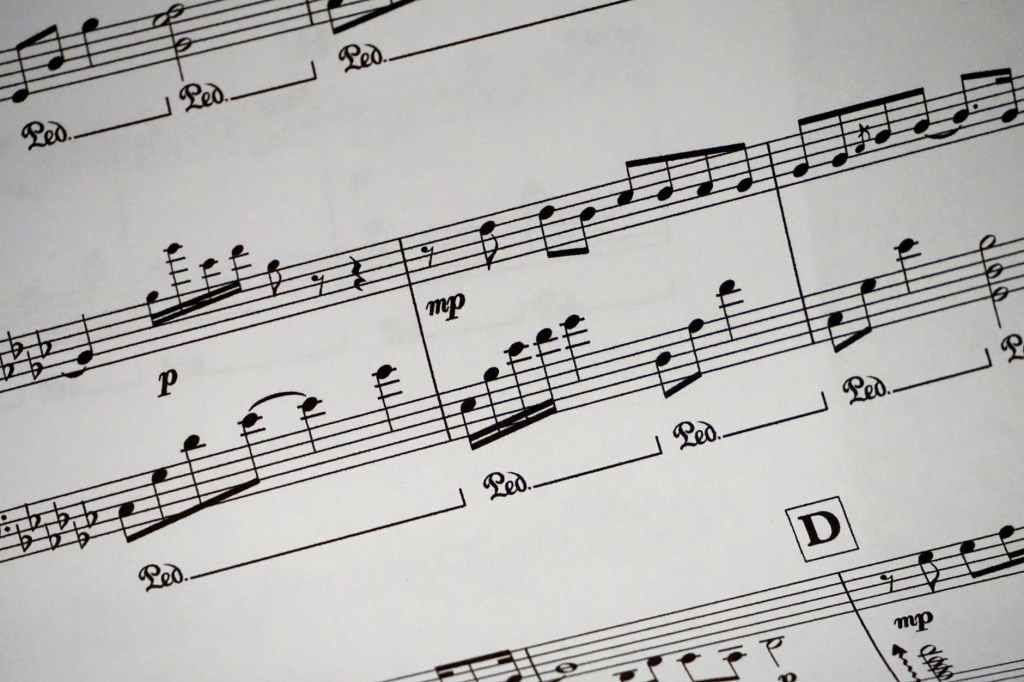
Rhythm, rhythm, fascinating rhythm.
Rhythm in music is super important. It’s a big part of what gives music interest. If all the notes were the same, it would get kind of boring real quick. A good, driving rhythm, pushes the music forward with excitement. A solid but laid back rhythm makes the music seem more relaxing. The rhythm combined with a well-written melody is what makes the song. Everything else is embellishment, which is not unimportant, because those embellishments enhance the tune. But you can’t have the embellishments without a good foundation and that foundation is the rhythm.
I often have my students complete a couple composing projects throughout the year. One of the first things we talk about is rhythm. Often, we write the rhythm first, then, add the melody. We might even talk about how to begin composing on another post soon!

Rhythm can also be tricky. First, you have to establish a sense of a solid steady beat. If you have trouble with steady beat, it will be difficult to count rhythms properly. The steady beat is like your heartbeat. It stays (mostly) the same throughout the song or piece of music. It’s what you clap to in faster songs. It’s the tapping of your toe when you hear music you like. And rhythm is the various types of notes that fit within that steady beat.
Recently, I created a series of rhythm worksheets for my students to practice their rhythm counting. There are also videos that go along with them where I demonstrate each rhythm and the student can play or clap along while counting. The rhythms start with easy beginner rhythms (Level 1A) and progress through more complex rhythms (Level 3C), even with varying time signatures. Each rhythm is played twice. The first time I count using rhythm syllables. Some younger students might remember learning such rhythm syllables in their elementary music class. We say things like “TA” for quarter notes and “TI-TI” for eighth notes. This gives you a way to count the rhythms without having to worry about numbers. It just gives you a different way to count while sort of visualizing the rhythm. The second time each rhythm is played, I use regular counting numbers so you can learn to count them more precisely.
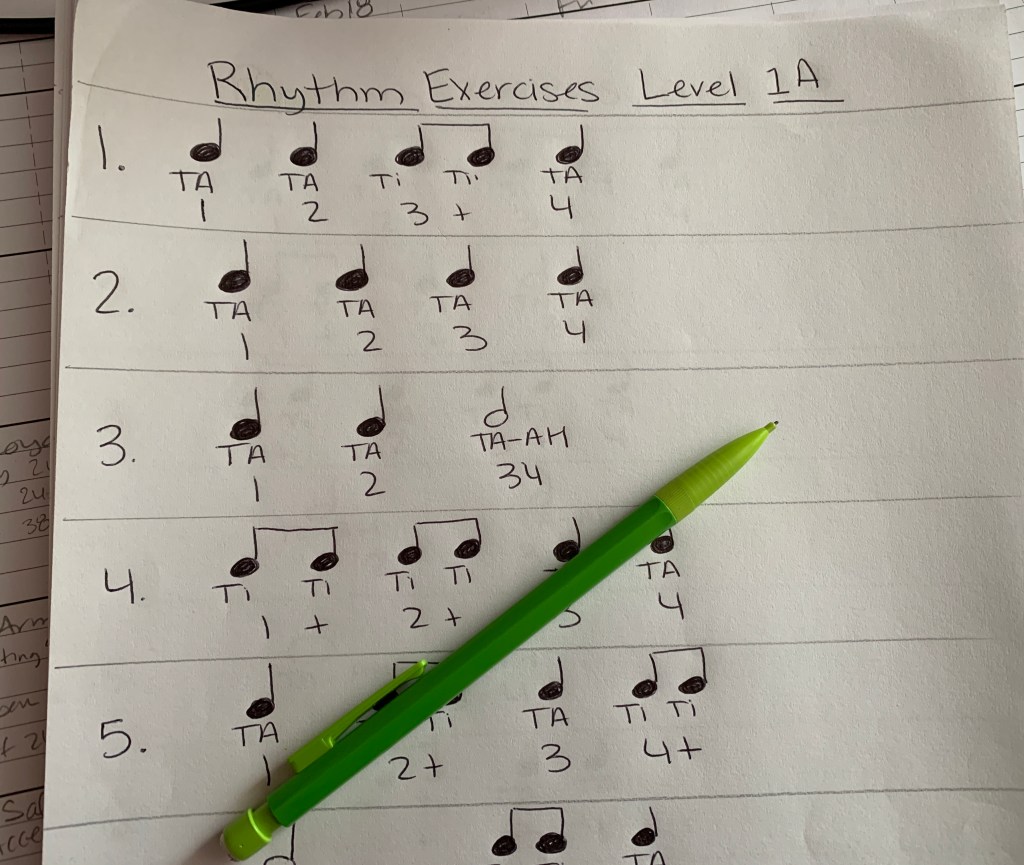
I’ve used these rhythms with all of my flute students and my piano students. And I might try using them with a few of my voice students as well. Even if you don’t have an instrument, you can clap the rhythms or pat the rhythms on your knees or tap your toe, or find some other type of movement to use that will help you count the rhythms with accuracy while keeping a steady beat.
Below, I have included the worksheets that you can print out or use on your screen, as well as the link for the Rhythm Playlist on my YouTube channel. With YouTube, you can even adjust the speed by clicking on the gear icon at the bottom right corner of the window so you can try the rhythms faster or slower. So get counting and have fun!

 Miss Donna 4 Music