What to of the first week of music class for a new school year?
As the new school year begins, setting the tone in your music class is crucial for a successful year ahead. Engaging students right from the start with a blend of rhythm basics, solfege, fun games, and folk dances can create a vibrant and enthusiastic learning environment. Here’s a guide to what you can do in the first week of music class.
Rhythm
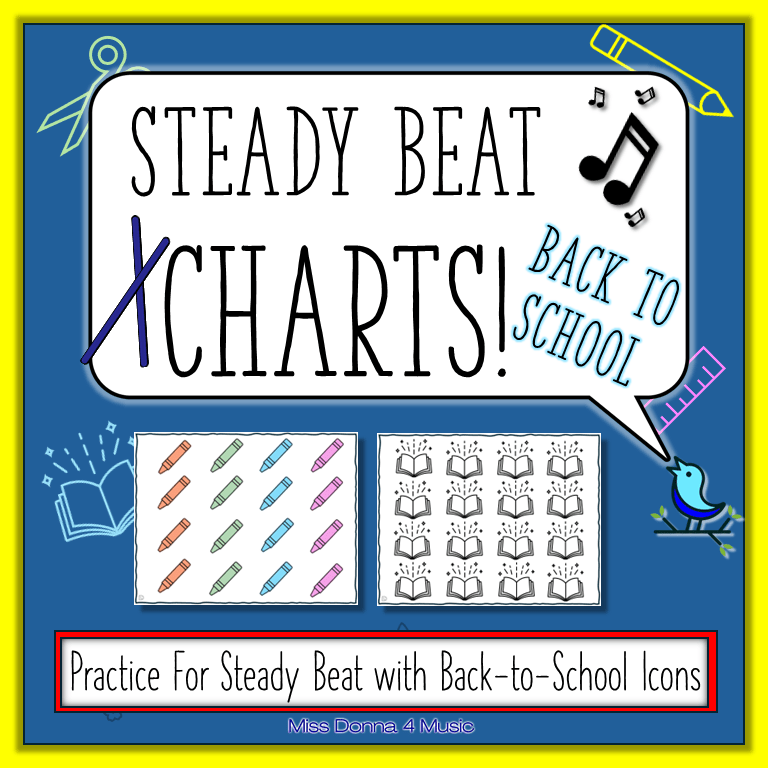
For younger students, establishing a steady beat right away is essential. Simply clapping to the beat of some recorded music or copying the teacher’s steady beat movements I an easy way to get started. Also using these steady beat charts provides a great visual of the steady beat while they tap to the music.
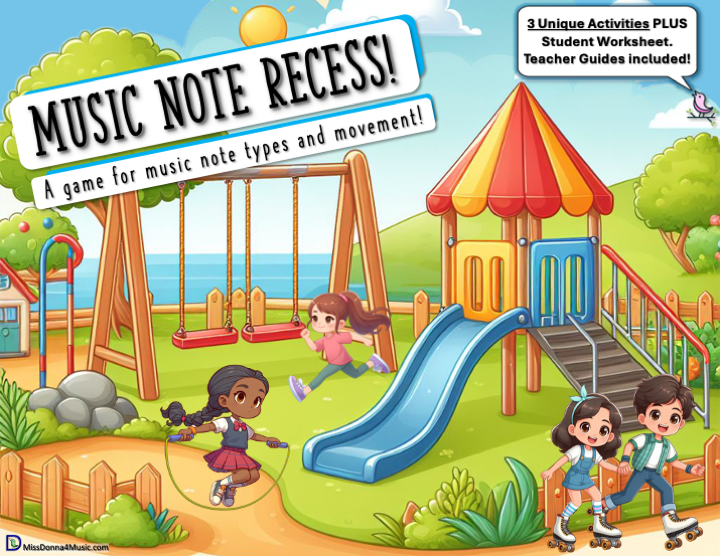
Music Note Recess is a FREE game I have available to introduce various note types and values at the beginning of the school year and gets kids up and moving right away with simple movements.
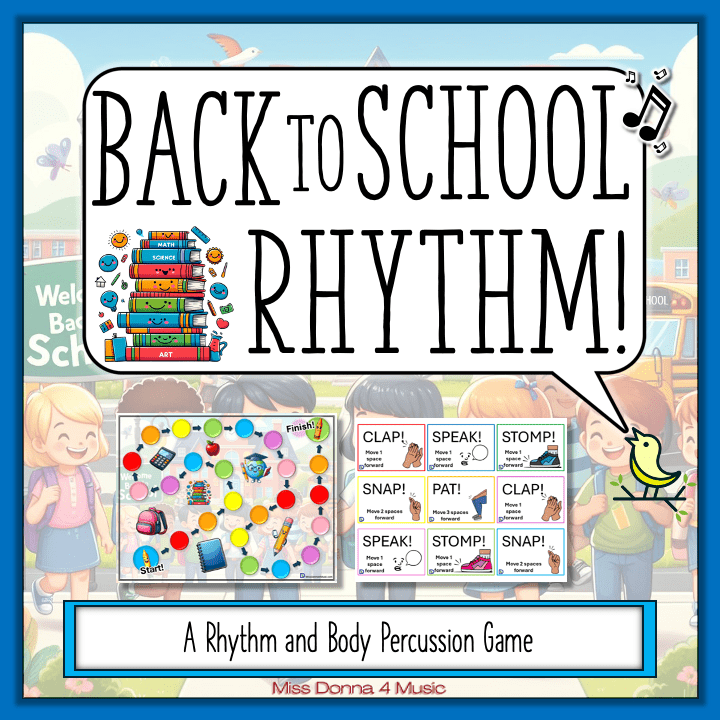
Back to School Rhythm & Body Percussion game is a great way to start older students reviewing rhythm patterns from the previous year as well as teaching them 1 or 2 newer ones for this school year. It also includes body percussion so it provides an easy movement activity. I used this game on my 2nd day of music and I divided each class into 4 small groups so they could play the game as a team.
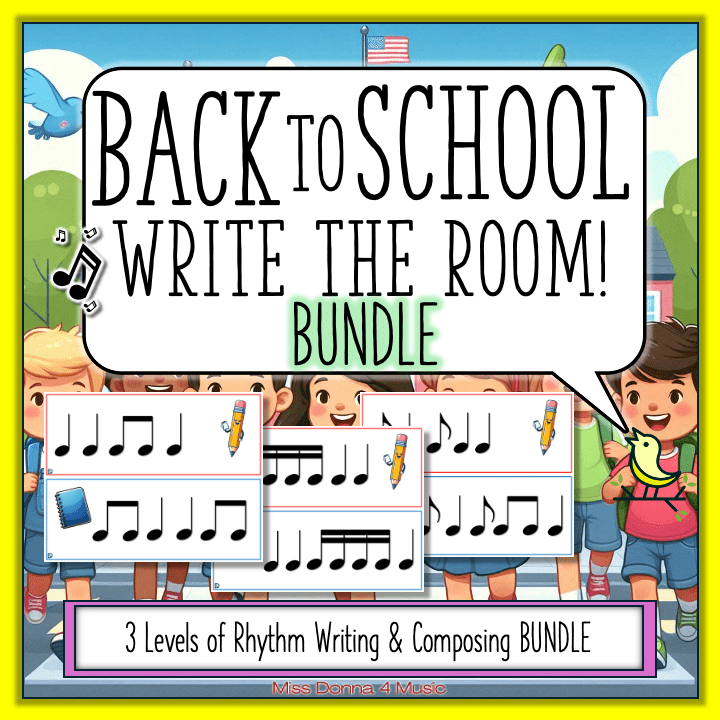
On my 3rd class we did some “write the room” with some simple rhythm patterns. My Back to School Write the Room Level 1 worked well for all my age groups, K-6. This level includes rhythms for quarter notes, eighth notes, quarter rests, and half notes. I also used a few rhythms from the Level 2 version to include some sixteenth notes for the upper elementary. The students located the rhythms patterns around the room, copied them on their worksheet, and then we played the rhythms as a class using rhythm sticks. There is also a Level 3 and all 3 levels are bundled together at a discount!

Solfege
In the first few classes I like to introduce SO & MI for kindergarten, and review LA for 1st-6th. For K we start off talking about high and low, then translate that to SO for high and MI for low. When we start to learn about LA I change that to high and make SO in the middle.
Shark Attack Solfege is a fun way to have students hear solfege patterns with SO, MI, and LA. They also are practicing singing them by echoing me first then singing it on their own. They are also seeing the patterns on a staff to get used to seeing the sound moving up and down, reinforcing the high and low.

As older students get reacquainted with SO, MI, and LA, later in the year I can add DO, RE, and high DO, and eventually Low SO and Low LA. And the shark theme is good to use all year long!
Movement
Movement is so important all year long but especially at the beginning of the school year and the end of the school year. An easy way to get kids moving is by putting rhythm or solfege into body percussion. Also “write the room” activities get the kids moving around the room in a free unchoreographed way.
Activities like Freeze Dance and 4 Corners are also easy winners for movement in elementary music that requires very little materials and prep. And the kids always love it and ask for it!
But there are also a few simple folk dances that you can use, even from day 1 of music class.
Sasha (a Russian folk dance) is super simple and I’ve done it on the very first day of music class a couple years in a row now. Students choose a partner, they recite a chant to each other at the beginning (Sasha! Sasha! Ras, Dva, Tri or 1, 2,3), then they clap their right hands together 3x, left hands together 3x, and both hands together 3x, then pat knees 3x really quickly. Then swing their partner by the elbow in one direction for 8 counts, then the other way for 8 counts. Then they have 32 counts to wander and dance freely around the room while they look for a new partner.
I shared about a few folk dances I did in the last blog post where I took a few traditional folk songs and dances that a lot of music teachers are already familiar with and I changed a few words to fit our ocean theme for the beginning of the year. All of them are easy for the students to learn quickly.

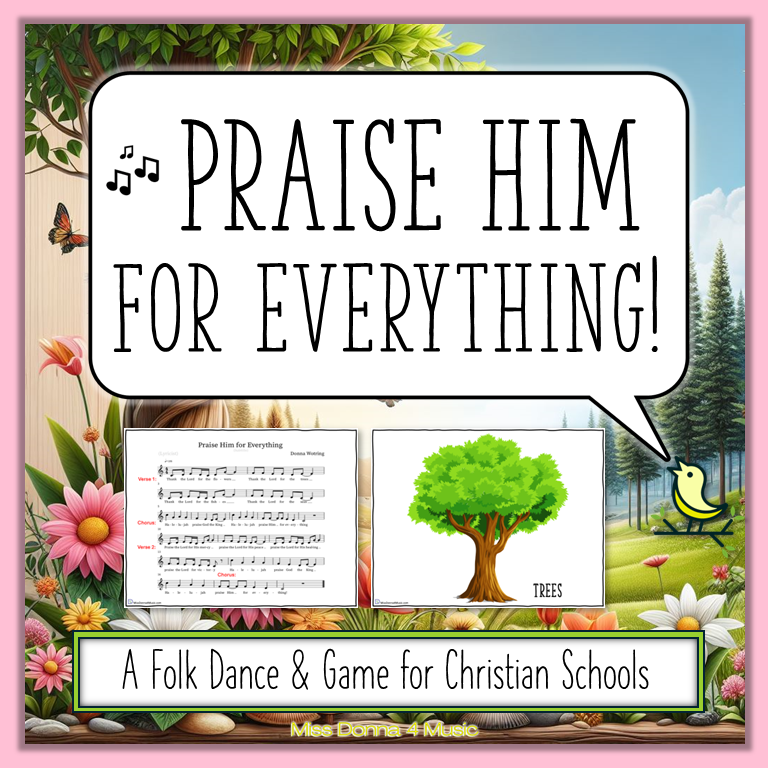
One of them, Little Red Sailboat, I created a resource for with all the instructions and dance steps along with teaching instructions for rhythm and steady beat. Resources for Little Mermaid Gal and Seashell Seashell are coming to my TPT store soon! And it you’re looking for a folk dance for Christian schools, I have Praise Him for Everything, an original song written by me that comes with a 4 Corners game as well.
Setting the tone
Creating a welcoming and fun atmosphere during the first week of music class sets the tone for the entire school year. Emphasizing rhythm and solfege basics while incorporating games and dances keeps students engaged and excited about music.
By integrating these activities, you’re not only making the learning process enjoyable but also building a strong foundation for future musical concepts. Here’s to a harmonious and melodious school year ahead!

 Miss Donna 4 Music