It’s finally springtime!! And that means spring break and the final quarter of the school year which sounds great! Except that also means the kids get a little crazy, which in turn makes the teachers crazy. So how do you keep your students engaged while still learning and not losing your mind???
I have 3 tips for you: games, movement, and centers!
Games
One of the easiest games is Four Corners. You don’t need any fancy equipment and there is literally no prep. All you need is a room with 4 corners and some music to play, which could be anything (your favorite Spotify or Pandora playlist, a YouTube channel with music, or just you playing on a piano or a recorder or singing or whatever). You can name the corners by number, by color, put up pictures of an animal in each corner, name each corner an instrument or instrument family…whatever theme you want to use. It’s somewhat like musical chairs, where the kids move around while music is playing, when the music stops, the teacher counts to 3 and all the students pick a corner. Then a “caller” who can’t see all the corners, calls out a corner and those in that corner are out. Keep going until there’s one kid left.

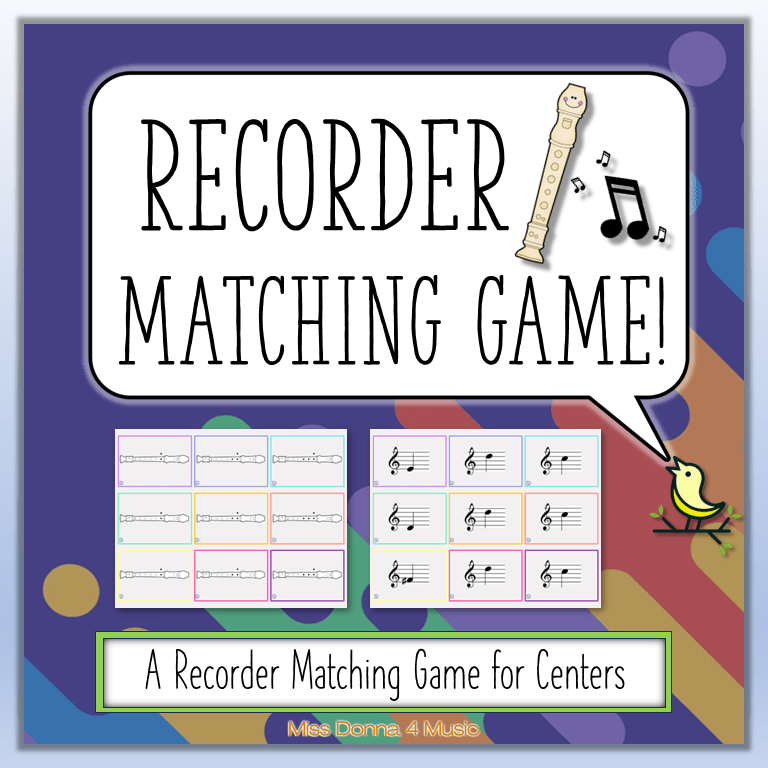
There are a lot of games available in my TPT store and lots more to come. Some of our favorites are Where’s the Mushroom (rhythm and time signatures), Zoo Symphony (instruments), Easter Chicks Chase (solfege singing which is fun all spring time, not just Easter), Rhythm Train, (rhythm and time signatures), and Recorder Matching Game (recorder playing, fingering, and note reading). All the games can be used with the whole class but are also great to use with centers and small groups.
Movement
Movement is a must in almost every class for me. Sometimes its as simple as doing Freeze Dance (play some music, periodically stop the music and the kids freeze, if they move, they’re out). But I really like doing folk dances. Some folk dances can get a little complicated but there are always ways to simplify them for different ages or abilities. Heck, sometimes my 3rd/4th graders pick up the dances quicker than my 7th/8th graders, depending on the particular class! Once you do a few of them and the kids start learning the dance language (terms like casting off, swing your partner, do-si-do, etc.) they pick them up even faster.
One I did at the beginning of the school year, is Sasha. I had never heard of it until last spring at an online teacher conference, and I thought, “I have to try that.” It’s great for the first day of music but it can be used all year round and I’ve done it with all grades, 1st-8th, and they get a real kick out of it. AND its super easy, anybody can get right away. It’s a Russian partner dance that starts with the kids in partners scattered around the room. When the music starts, they point to each other and say, “Sasha, Sasha, ras drei, tri” (or count to 3). Then they clap right hand with their partners right hand, 3 times quickly, then the left hands 3 times, then both hands 3 times, then pat knees 3 times. Then they swing their partner by the elbow 8 beats one direction, then 8 beats the other direction. Then they have 32 beats to freely move around the room and find a new partner and do it all over again.
There’s a great Youtube video that I use that has the music and directions. Check it out here.
Centers
There is SO much you can do with centers but they can be a little chaotic. The key is to be organized, plan ahead, and keep the center activities short and simple so they can easily do them without a lot of teacher help or intervention. Also if students are rotating through the centers as specific intervals, have a clear signal when its time to move to the next one. I usually have a signal for when its time to clean up their center, then another signal for when to actually move to the next center, and a different signal when it’s time to stop because class is almost over or I need their attention.
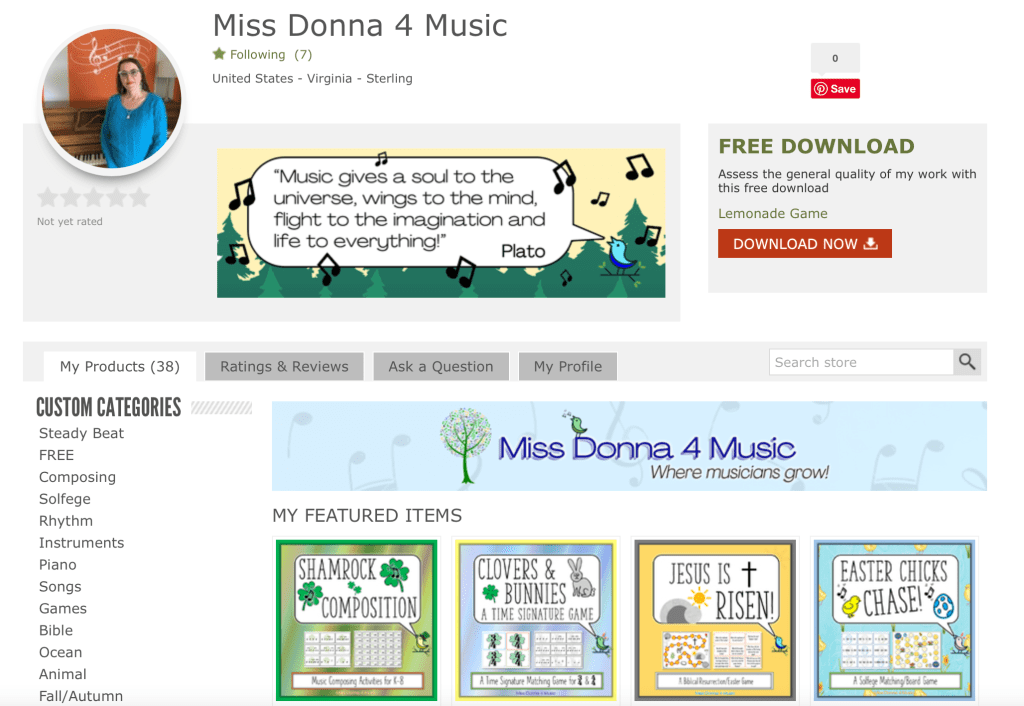
Pretty much all of my games and activities in my TPT store can be used in centers or small group work. There are also lots of simple worksheets and composing activities that can used in centers as well. Again, keep the centers short and simple. Centers are a great way to allow your students some wiggle room and freedom to chat with friends and move around freely while still learning and making music. It’s an easier way to assess where each student is at and I love it when I see students helping each other learn as well. I’ve also seen kids who are normally shy and reserved come out of their shell a little more when in a small group at a center which they would never do with the whole class. And I just get to sit back and watch the magic happen.

 Miss Donna 4 Music